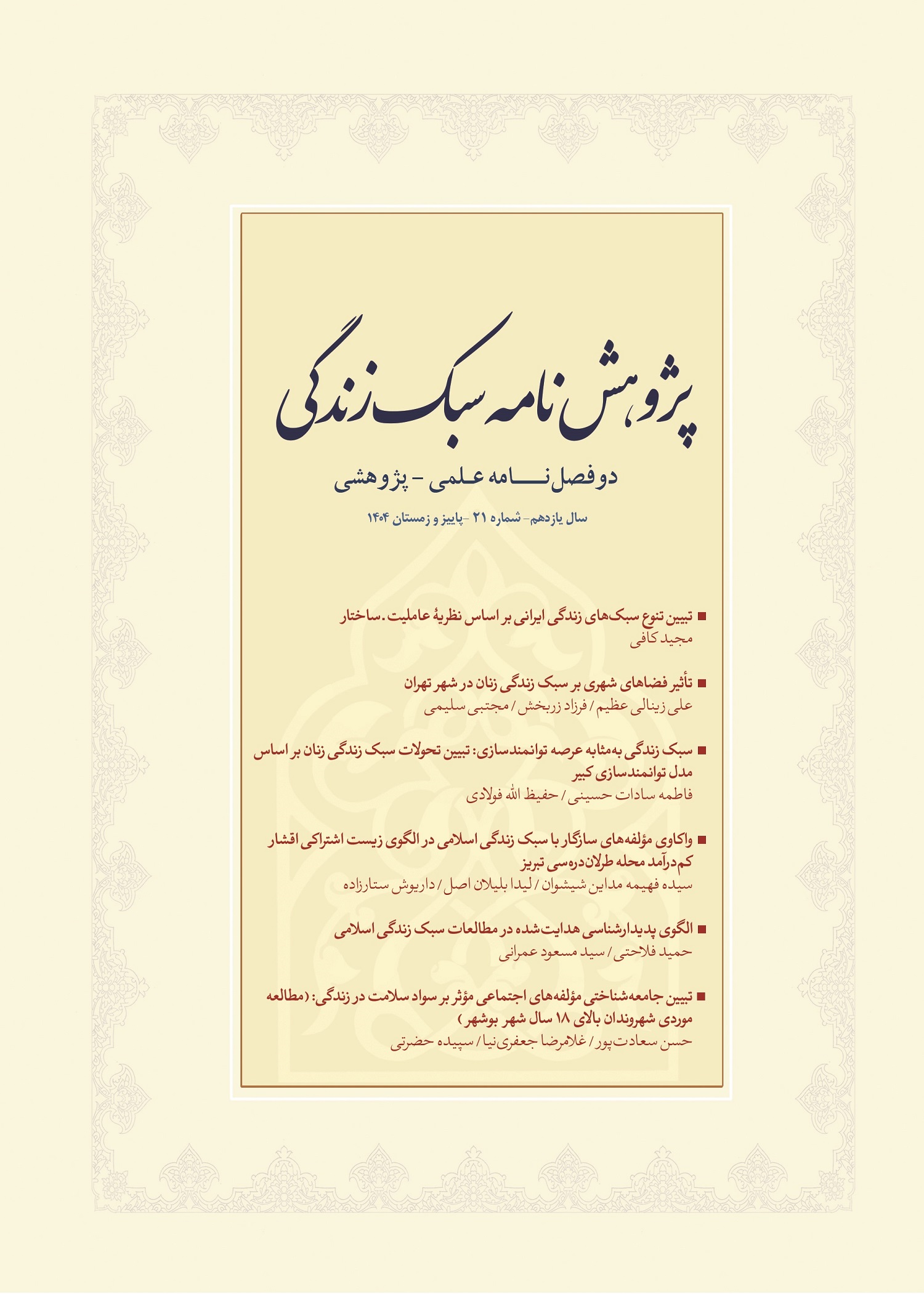
پژوهشنامه سبک زندگی

پژوهشنامه سبک زندگی

تبیین تنوع سبک‌های زندگی ایرانی بر اساس نظریۀ عاملیت ـ ساختار

نوع مقاله : علمی - پژوهشی

نویسنده
دانش آموخته حوزه علمیه قم، دانشیار و مدیر گروه علوم اجتماعی، پژوهشگاه حوزه و دانشگاه، قم، ایران.
چکیده
خاستگاه تنوع سبک زندگی در هر جامعه، مجموعه‌ای از عوامل تاریخی، اجتماعی و فرهنگی آن جامعه است. در جوامعی که از تنوع فرهنگی و اجتماعی برخوردارند، نمی‌توان از وجود یک سبک زندگی واحد سخن گفت. در ایران، به دلیل تلاقی فرهنگ‌های گوناگون، تحولات گسترده جهان معاصر و ورود رویکردها، گرایش‌ها و کالاهای فرهنگی جدید و نیز امروزه با حضور رسانه‌های نوین، فناوری‌های اطلاعات و ارتباطات و شبکه‌های اجتماعی مجازی، طیف متنوعی از سبک‌های زندگی شکل گرفته است. بر این اساس، پرسش اصلی آن است که تنوع سبک‌های زندگی اسلامی ـ ایرانی در دوره معاصر، بر پایه چه عوامل و دلایلی قابل تبیین است؟ روش این پژوهش، استنطاق و به بیان دیگر، فرایندی پرسش‌محور است که از طریق گام‌های متوالی، میان آثار اجتماعی و دینی و موضوع پژوهش ارتباط برقرار می‌کند. استنطاق اشاره به چیزی دارد که نتیجه‎گیری می‎شود و به معنایی که به‎صراحت بیان نشده است، ولی می‎توان آن را استنباط کرد. بر اساس پیوند عاملیت و ساختار، می‌توان نتیجه گرفت که دو عامل در این خصوص تأثیرگذارند: نخست، تلاقی فرهنگ‌های گوناگون در جامعه ایران اسلامی؛ و دوم، سیطره یکی از شرایط زمینه‌ای در یک دوره تاریخی یا در میان یک گروه یا شبکه اجتماعی؛ از شخصیت عاملان و ساختارهای اجتماعی و فرهنگی گرفته تا مهم‌تر از همه، ساختارهای نوین فناوری اطلاعات و ارتباطات و شبکه‌های اجتماعی مجازی.
کلیدواژه‌ها
موضوعات

عنوان مقاله English

Explaining the Diversity of Iranian Lifestyles Based on Agency–Structure Theory

نویسنده English

majid kafi
Associate Professor and Head of the Department of Social Sciences, Research Institute of Hawzah and University, Qom, Iran.
چکیده English

Rooted in the historical, social, and cultural conditions of every society, the diversity of lifestyles reflects the distinctive characteristics of that society. In societies characterized by cultural and social diversity, the existence of a single lifestyle cannot be assumed. In Iran, a diverse spectrum of lifestyles has emerged, shaped by the convergence of diverse cultures, the profound transformations of the contemporary world, the introduction of new cultural approaches, orientations, and cultural goods, and, more recently, by the expansion of new media, information and communication technologies, and virtual social networks. Against this backdrop, the central question concerns the factors accounting for the diversity of Islamic–Iranian lifestyles in the contemporary period. The study employs istintāq, a question-driven method establishing connections between social and religious works and the research subject through successive stages. Istintāq refers to that which is inferred, denoting a meaning not explicitly stated yet capable of being inferred. Grounded in the agency–structure nexus, the study concludes that two factors are influential: first, the convergence of diverse cultures in Iranian Islamic society; and second, the predominance of a particular contextual condition within a given historical period or among a particular group or social network, extending from the characteristics of agents and social and cultural structures to, above all, the emerging structures of information and communication technologies and virtual social networks.

This diversity and multiplicity are also evident in Islamic knowledge and the realization of Islam. It is clear that every religion, including Islam, offers teachings for the lifestyle of its followers. However, how do these religious teachings manifest for individuals living in specific contextual, cultural, and ethnic conditions? It is also evident that the Islamic lifestyle, due to its manifestation in varying contextual conditions across Islamic societies, is diverse and multifaceted. Therefore, one can speak of "Islamic lifestyles" rather than a singular "Islamic lifestyle.

کلیدواژه‌ها English

Iranian lifestyle
agency&‌ndash
structure
istintāq method
information and communication technology
virtual social networks
بختیاری، آمنه و نصیری، بهاره (۱۳۹۵). «واکاوی تأثیرات شبکه‌های اجتماعی بر سبک زندگی خانواده ایرانی (با تأکید بر مخاطرات و آسیب‌های شبکه‌های اجتماعی)». مدیریت شهری و روستایی، شماره ۴۵، صص. ۴۶۵–۴۷۸.
بوردیو، پیر (۱۳۸۹). نظریه کنش: دلایل عملی و انتخاب عقلانی. ترجمه مرتضی مردیها. چاپ سوم. تهران: انتشارات نقش و نگار.
پارکر، جان (۱۳۸۵). ساخت‌یابی. ترجمه حسین قاضیان. تهران: نشر نی.
پورداود، ابراهیم (۱۴۰۱). فرهنگ ایران باستان. چاپ سوم. تهران: انتشارات اساطیر.
حوراء (۱۳۸۵). نظام اسلامی و مسئله پوشش زنان. شماره ۲۳.
ذکایی، محمدسعید (۱۳۸۶). جامعه‌شناسی جوانان ایران. تهران: آگاه.
الصدر، السید محمدباقر (۱۴۲۱ق). المدرسة القرآنیة. قم: مرکز الأبحاث و الدراسات التخصصیة للشهید الصدر.
دل، یان، و هک، تونی. (۱۳۹۰). روش‌شناسی مطالعه موردی در پژوهش‌های مدیریت: آزمون نظریه و نظریه‌پردازی (حسن دانایی‌فرد، مترجم). تهران: دانشگاه امام صادق (ع).
گیتی‌پسند، زهرا، فرحبخش، کیومرث، اسمعیلی، معصومه و ذکایی، محمدسعید (۱۳۹۴). «مؤلفه‌های معنای زندگی در زوجین متقاضی طلاق». فصلنامه مشاوره و روان‌درمانی خانواده، سال ۵، شماره ۲ (پیاپی ۱۸)، صص. ۵۰–۹۹.
گیدنز، آنتونی (۱۳۸۷). تجدد و تشخص (جامعه و هویت شخصی در عصر جدید). ترجمه ناصر موفقیان. چاپ پنجم. تهران: نشر نی.
گیدنز، آنتونی (۱۳۸۹). جامعه‌شناسی. ترجمه حسین چاوشیان. تهران: نشر نی.
مرکز آمار ایران (۱۳۸۹). اطلاعات آمار زنان و خانواده. در: https://www.amar.org.ir/
نصر، حسین (۱۳۷۴). جوان مسلمان و دنیای متجدد. ترجمه مرتضی اسعدی. تهران: طرح نو.
نصر، سیدحسین (۱۳۸۱). اسلام و تنگناهای انسان متجدد. تهران: دفتر پژوهش و نشر سهروردی.
Albrechtsen, S. J. (2001). Technology and lifestyle: Challenges for leisure education in the millennium. World Leisure, 43(1), 11–19.
Barnett, E., & Casper, M. (2001). “A definition of social environment.” American Journal of Public Health, 91(3), 465.
Chesley, N. (2006). “Families in a high-tech age: Technology usage patterns, work and family correlates, and gender.” Journal of Family Issues, 27, 587–608.
Cockerham, W. C., Rutten, A., & Abel, T. (1997). “Conceptualizing contemporary health lifestyles: Moving beyond Weber.” The Sociological Quarterly, 38(2), 321–342.
Kavanaugh, A. L., & Patterson, S. J. (2001). “The impact of community computer networks on social capital and community involvement.” American Behavioral Scientist, 45, 496–509.
Kautiainen, S., Koivusilta, L., Lintonen, T., Virtanen, S. M., & Rimpelä, A. (2005). “Use of information and communication technology and prevalence of overweight and obesity among adolescents.” International Journal of Obesity, 29, 925–933.
Horst, H. A. (2010). Hanging Out, Messing Around, and Geeking Out. Cambridge, MA: MIT Press, pp. 29–79.
Lenhart, A., Madden, M., & Hitlin, P. (2005). Teens and Technology: Youth Are Leading the Transition to a Fully Wired and Mobile Nation. Washington, DC: Pew Internet & American Life Project.
Liddon, N. C. (2000). Green Snake Bitten: Drinking, Health Lifestyles, Social Structure and Health in Post-Soviet Russia (Ph.D. dissertation). The University of Alabama at Birmingham.
Turkle, S. (2011). Alone Together: Why We Expect More from Technology and Less from Each Other. New York: Basic Books.
Whitty, M. T. (2002). “Liar, liar! An examination of how open, supportive and honest people are in chat rooms.” Computers in Human Behavior, 18, 343–352.
 

  • تاریخ دریافت 20 شهریور 1404
  • تاریخ بازنگری 10 آبان 1404
  • تاریخ پذیرش 20 بهمن 1404