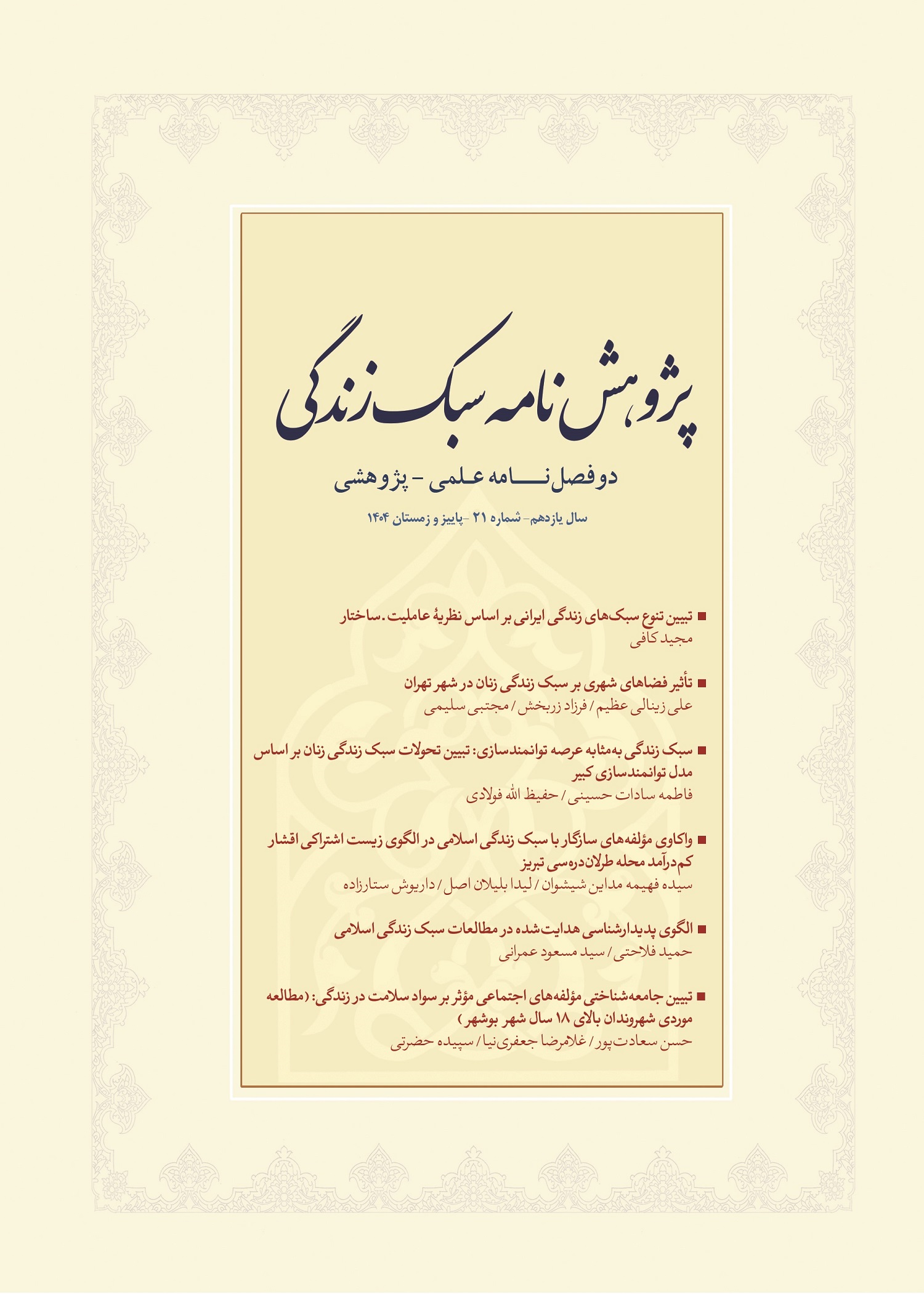
پژوهشنامه سبک زندگی

پژوهشنامه سبک زندگی

الگوی پدیدارشناسی هدایت‌شده در مطالعات سبک زندگی اسلامی

نوع مقاله : علمی - پژوهشی

نویسندگان
1 استادیار گروه معارف اسلامی دانشگاه فرهنگیان
2 گروه آموزش معارف اسلامی دانشگاه فرهنگیان تهران ایران
10.22034/jl.2026.580113.1807
چکیده
پدیدارشناسی دینی به‌عنوان یکی از رویکردهای تحلیلی معاصر، با تمرکز بر «تجربه زیسته» و «نحوه ظهور امر قدسی در آگاهی مؤمنان»، افق جدیدی در مطالعات دین گشوده است. این مقاله با روش تحلیل مفهومی و استدلال فلسفی، به تبیین ظرفیت‌ها و محدودیت‌های روش پدیدارشناسی دینی در مطالعات سبک زندگی اسلامی می‌پردازد. پرسش اصلی آن است که روش پدیدارشناسی دینی چه نسبتی با روش اجتهادی در مطالعات سبک زندگی اسلامی دارد. یافته‌های پژوهش نشان می‌دهد، پدیدارشناسی دینی با تأکید بر ارکانی چون «تجربه زیسته»، «اپوخه» و «تحلیل نحوه ظهور»، امکان پل زدن میان متن مقدس و زیست روزمره مؤمنان را فراهم می‌کند. با این حال، این روش به تنهایی فاقد حجیت شرعی و معرفتی در استنباط هنجارهای دینی است. افزون بر این، اصل «اپوخه» با التزام به وحی که پیش‌فرض اساسی پژوهش دینی اسلامی است، تعارض بنیادین دارد و در صورت عدم نظارت وحی و عقل برهانی، خطر نسبی‌گرایی معنایی را به همراه می‌آورد. مقاله در نهایت الگوی «پدیدارشناسی هدایت‌شده» را پیشنهاد می‌کند؛ رویکردی که در آن تجربه زیسته در پرتو وحی تفسیر می‌شود و پدیدارشناسی در کنار روش اجتهادی نقشی تکمیلی ایفا می‌کند.
کلیدواژه‌ها
موضوعات

عنوان مقاله English

The Guided Phenomenology Model in Islamic Lifestyle Studies

نویسندگان English

حمید falahati 1
Seyed Masoud Omrani 2
1 Assistant Professor of the Department of Islamic Studies, Farhangian University
2 Islamic Education Department, Farhangian University, Tehran, Iran
چکیده English

Religious phenomenology, as a major contemporary analytical approach, has opened new horizons in religious studies by focusing on “lived experience” and “the mode of manifestation of the sacred in the believer’s consciousness.” This article employs conceptual analysis and philosophical reasoning to examine the capacities and limitations of the phenomenological method in Islamic lifestyle studies. Its central research question is: what relationship does religious phenomenology bear to the method of ijtihad (juridical reasoning) in the study of Islamic lifestyle? The findings show that religious phenomenology – through its emphasis on “lived experience,” “epoché,” and “analysis of the mode of manifestation” – makes it possible to bridge the sacred text and the everyday life of believers. However, this method alone lacks both religious authority and epistemological validity in deriving normative religious precepts. Furthermore, the principle of “epoché” fundamentally conflicts with the commitment to revelation, which is the basic presupposition of any Islamic religious research. Without the supervision of revelation and demonstrative reason, this method risks falling into semantic relativism. Finally, the article proposes a “Guided Phenomenology” model, an approach in which lived experience is interpreted in the light of revelation and phenomenology plays a complementary role alongside ijtihad.

کلیدواژه‌ها English

Religious Phenomenology
Islamic Lifestyle
Lived Experience
Methodology of Religious Understanding
Ijtihad

مقالات آماده انتشار، پذیرفته شده
انتشار آنلاین از 04 تیر 1405

  • تاریخ دریافت 11 اردیبهشت 1405
  • تاریخ بازنگری 28 اردیبهشت 1405
  • تاریخ پذیرش 10 خرداد 1405